The Karnali River, originating from Mansarovar and Rokas lakes in Tibet, is the longest river flowing entirely within Nepal and serves as a crucial habitat for the Ganges River dolphins (Platanista gangetica gangetica). As the river descends from the Churia mountain range, it bifurcates into the Geruwa (eastern) and Karnali (western) channels. The Karnali River Basin (KRB) is one of Nepal’s three major basins, alongside the Gandaki and Koshi basins, and encompasses six major watersheds: West Seti, Kawadi, Humla Karnali, Mugu Karnali, Tila, and Bheri. Notably, all but the Humla Karnali originate within Nepal.
The dolphin distribution within these rivers is highly uneven and significantly influenced by seasonal variations in water levels, with sightings fluctuating due to changes in water depth and flow. Upon descending from Chisapani, the Karnali splits into two primary channels. The eastern channel forms the westernmost boundary of Bardia National Park, while the western channel flows past Tikapur. This western channel is fed by several streams, including the Mohana, Kandra, Kada, and Khuleria, which swell during the monsoon season, providing essential migratory spaces for dolphins when the main channels experience high water currents.

Distribution and Population
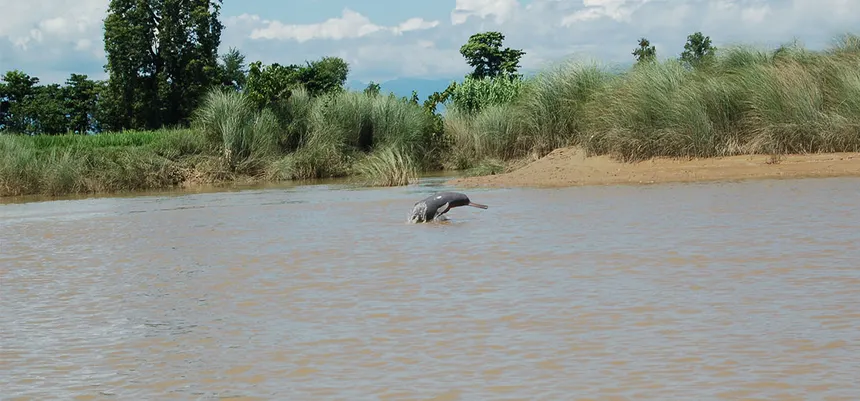
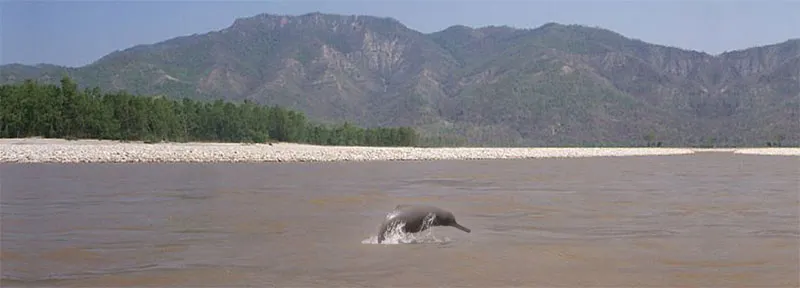
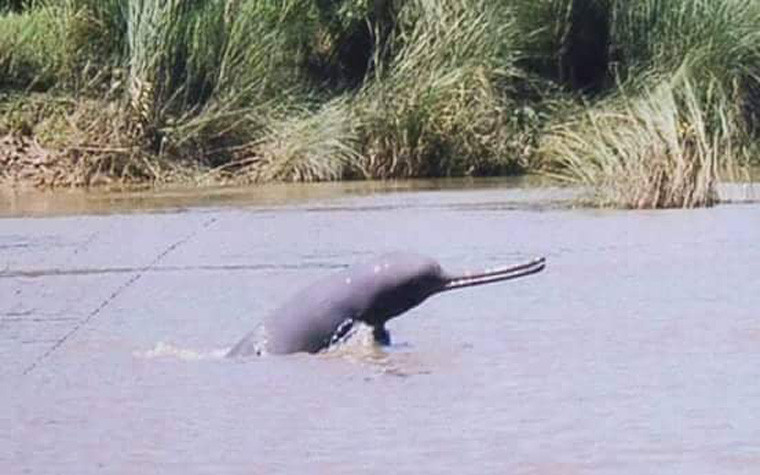
Ganges River dolphins (Platanista gangetica gangetica) are found throughout the Karnali and Geruwa rivers, with their distribution varying seasonally based on water levels. Depth and flow are crucial factors, with dolphins preferring depths between 3 to 5 meters. Seasonal migrations occur during pre-monsoon and monsoon periods when dolphins move into tributaries like the Mohana, Kanda, Patharaiya, and Kandra streams. The total dolphin population in the Karnali River system is estimated to be between 48 and 100 individuals, based on various studies and local observations. However, these estimates vary, highlighting the need for comprehensive studies to accurately determine population sizes. For instance, studies in 2016 reported around six individuals, while more recent estimates suggest numbers between 48 and 60 in the Mohana section and around 43 in the entire river system. Local conservation efforts suggest a population of around 80 individuals.
Ganges River dolphins prefer deep, slow-moving waters and are often found in river confluences, meandering rivers, and open rivers. They typically inhabit depths between 3 to 5 meters but can adapt to as low as 2 meters. The distribution and population of dolphins in the Karnali and Geruwa rivers vary seasonally, heavily influenced by water depth and flow . Floods, such as the one in 2009, can significantly alter dolphin habitats by changing river depths through sediment deposition. Dolphin observation is easier in smaller rivers like the Kandra, Kanda, Pathraiya, and Mohana, where they migrate during monsoon seasons when water levels rise. These smaller rivers provide slower-moving waters, making it easier to spot dolphins and their young.
“With every drop of water you drink, every breath you take, you’re connected to the sea. Elephant conservation reminds us how interconnected life truly is.”
Threats to Ganges River Dolphin in Nepal
The Ganges River Dolphin (Platanista gangetica gangetica) faces multiple threats in Nepal, primarily due to human activities and environmental changes. These threats are significant enough to endanger the species’ survival in the region.
1. Habitat Degradation and Fragmentation :
Infrastructure projects such as roads, irrigation schemes, and hydropower plants have significantly altered the natural flow and depth of rivers, impacting dolphin habitats. For instance, the Rani Jamara Kulariya Irrigation Project has reduced the depth of the Karnali River, which affects the dolphins’ preferred habitats of deep, slow-moving waters. Additionally, channel modifications from sediment extraction and artificial narrowing contribute to habitat fragmentation, making it difficult for dolphins to navigate and find suitable living conditions.
2. Pollution
Pollution from agricultural runoff, including pesticides and fertilizers, poses a severe threat to river dolphins. These chemicals degrade water quality and can harm dolphins directly or indirectly through their prey. Studies have highlighted the presence of toxic contaminants like organochlorine in the tissues of river dolphins, which are high enough to cause concern.
3. Fishing Practices
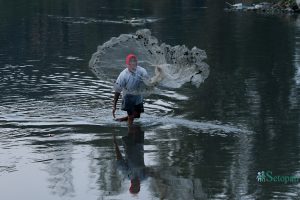
Intensive fishing practices in the Karnali and Geruwa rivers lead to the depletion of fish stocks, which are a crucial food resource for dolphins. Moreover, traditional fishing nets pose a risk of entanglement, which can lead to injury or death of dolphins. The Sonaha community, who rely on fishing for subsistence, often engage in practices that inadvertently threaten dolphin populations.
4. Climate Change and Natural Disasters
Climate change is altering hydrological patterns, leading to more extreme weather events such as floods and droughts. These changes can result in habitat loss, changes in water quality, and shifts in river channels, which are detrimental to dolphin populations. For example, the 2014 flood in the Karnali River drastically altered water levels and channels, displacing many dolphins from their habitats.
5. Declining Prey Population
The use of pesticides and other pollutants in agriculture negatively impacts the fish populations that dolphins feed on. Reduced fish stocks due to overfishing and pollution have a cascading effect on the dolphin population, making it harder for them to find adequate food.
Ways Forward
1. Habitat Protection and Restoration
Conservation efforts should focus on protecting and restoring natural habitats. This can include establishing protected areas, such as the boundaries of Bardia National Park, and implementing strict regulations on development projects that alter river ecosystems. Additionally, reforestation of riparian zones and restoration of grasslands can help stabilize riverbanks and improve water quality.
2. Pollution Control
Reducing agricultural runoff by promoting organic farming practices and the use of less harmful pesticides can significantly improve water quality. Education and awareness programs for farmers about the impacts of pesticides on aquatic ecosystems are also crucial. Implementing stricter regulations on industrial discharge into rivers can further mitigate pollution.
3. Sustainable Fishing Practices
Promoting sustainable fishing practices that minimize the risk of dolphin entanglement is essential. This includes the use of dolphin-safe fishing gear and the establishment of no-fishing zones in critical dolphin habitats. Community-based conservation programs involving local fishermen can ensure that sustainable practices are adhered to while also protecting their livelihoods.
Author
Sweccha Raut
Research Officer
Related Posts